 Almabsat
 العربية
 English
 中文
中文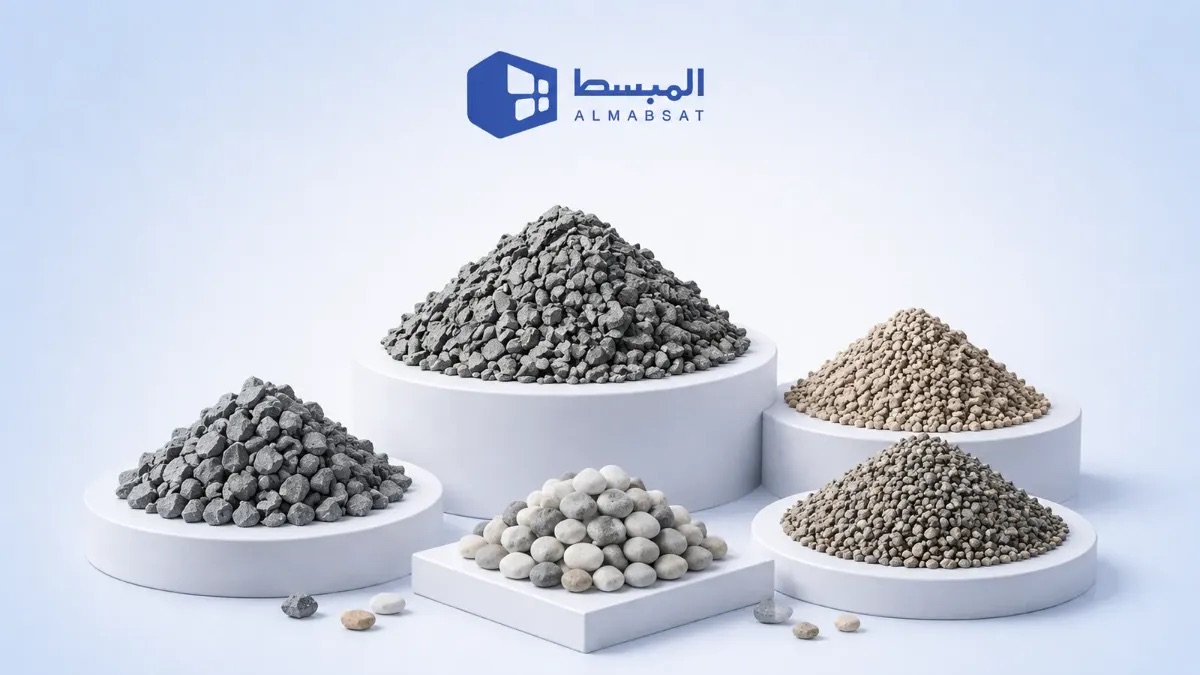
Gravel comes in many types and is one of the most important materials used in concrete, road work, and infrastructure. Types and sizes vary based on use and project requirements, and each type has properties that affect load-bearing capacity, finish quality, and construction efficiency — making the right choice essential for durable, well-engineered results.
What Is Gravel?
Gravel is the coarse aggregate in concrete — rock particles larger than sand, generally 4.75–40 mm across, that carry structural loads while sand fills the gaps between particles. Gravel typically makes up a larger share of a concrete mix than sand.
Types of Gravel
By source
- Natural gravel: river gravel (rounded, smooth grains) or quarry/marine gravel (needs washing to remove salts).
- Crushed/manufactured gravel: produced by crushing rock, giving angular grains for better bonding with concrete.
- Recycled gravel: from crushed old concrete, used in foundations and roads to reduce waste.
By grain size
- Fine gravel (4.75–10 mm) — thin concrete and slabs.
- Medium gravel (10–20 mm) — common in ordinary concrete for floors and walls.
- Coarse gravel (20–40 mm+) — foundations, mass concrete, and road work.
By rock composition
- Siliceous gravel — high silica content, strong under pressure, ideal for high-grade concrete.
- Limestone gravel — softer than basalt but affordable for some applications.
- Basaltic/volcanic gravel — hard volcanic rock, suited to demanding projects.
Best Gravel for Foundations
Crushed, well-graded gravel from hard rock like granite or basalt, in a coarse 20–40 mm range, is the best choice for footings and foundations, giving good density and strength while cutting water content and voids. Sea or unwashed limestone gravel with high salt/chloride content should be avoided in reinforced foundations unless thoroughly washed and tested.
River Gravel vs. Crushed Gravel
River gravel has rounded, smooth grains that are easier to place but bond less strongly with cement paste, giving slightly lower strength for the same mix. Crushed gravel has angular, rough grains that create better surface contact and interlock, producing stronger concrete — though it needs a little more water for the same workability. Crushed gravel is generally preferred for reinforced structural concrete, while river gravel suits non-structural or road-base work.
Buy 3/8 and 3/4 Aggregate in Saudi Arabia from Almabsat
Almabsat supplies a full range of gravel sizes and grades for every construction need, whether you want to buy crushed aggregate Saudi Arabia or natural, well-graded gravel. If you want to buy 3/8 aggregate Saudi Arabia for general concrete, or buy 3/4 aggregate Saudi Arabia for heavy-duty foundation work, Almabsat is an affordable aggregate supplier with fast delivery and competitive pricing that includes shipping and tax.
FAQ: Types of Gravel
What's the best gravel for reinforced concrete?
Hard crushed gravel like granite or basalt, medium to coarse (10–40 mm) with good grading, gives the strongest reinforced concrete.
Is marine gravel allowed in reinforced concrete?
Yes, but it needs thorough washing to remove salts and chlorides, or it can corrode reinforcing steel; it's more commonly used in non-structural concrete or roads.
Is recycled gravel useful?
It can be used in road base layers or non-structural concrete if tested and washed, but isn't recommended for critical structural elements without engineering approval.
Gravel type is a core factor in construction success and concrete quality. For the best materials at competitive prices and reliable service, order what you need through Almabsat today.
You may also like:
- What is gravel, what is it used for, and why does it matter in construction?
- Large vs. Small Gravel: How to Choose the Right Size for Your Project
General Disclaimer:
The information provided in this article is intended for general awareness purposes, aimed at helping readers better understand construction materials, procurement processes, and make more informed decisions. While Almabsat takes care in preparing and reviewing this content, every project is unique, and technical specifications, quantities, prices, execution methods, regulations, and manufacturer instructions may vary.
Therefore, this content should not be considered a substitute for engineering, technical, or professional consultation. It is recommended to consult engineers, consultants, and relevant authorities, and to review technical specifications and manufacturer instructions before making any design, execution, or purchasing decisions.
If this article includes any prices or price indicators, they are for guidance purposes only and may vary depending on the city, quantity, brand, purchase date, and market conditions.
If you need assistance with quantity estimation, BOQ review, or obtaining a quotation, the Almabsat team will be happy to assist you.