 Almabsat
 العربية
 English
 中文
中文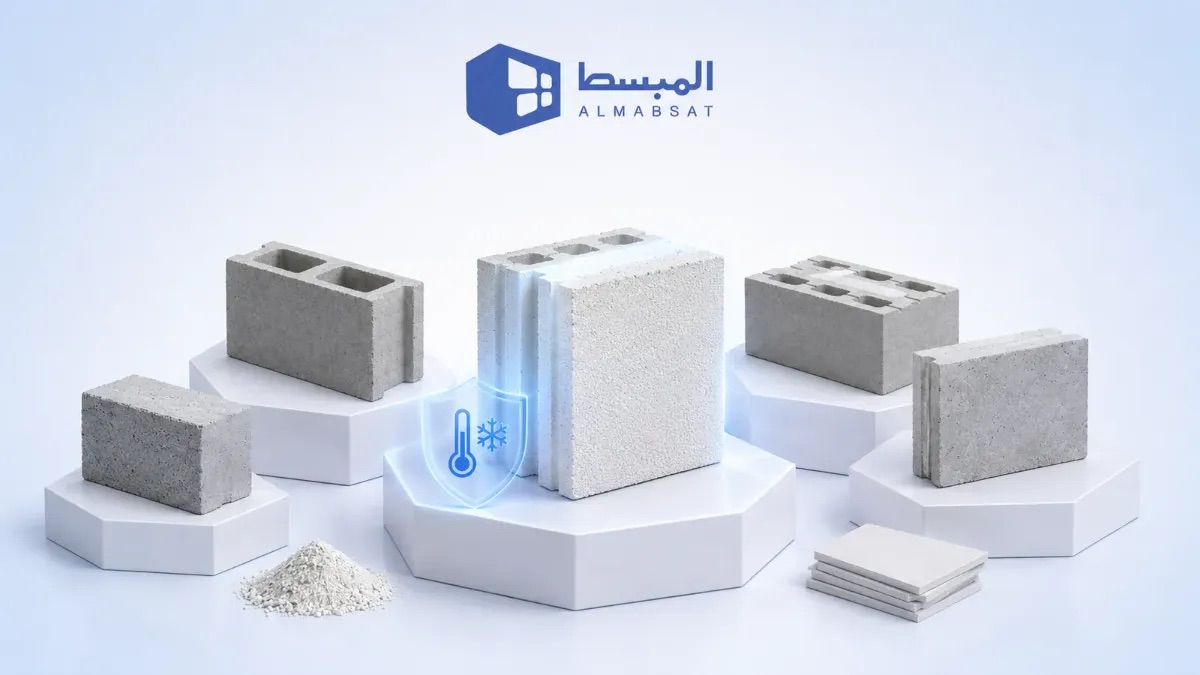
Choosing the best block for heat insulation is one of the most important decisions in Saudi construction, given the Kingdom's high temperatures. The right block affects far more than wall-building — it directly shapes indoor comfort and energy consumption. Block types differ in thermal properties, density, and composition, so the right choice depends on the project and its insulation needs.
Best Block Types for Heat Insulation
1. AAC (Autoclaved Aerated Concrete) — the top choice
One of the most thermally efficient block types in Saudi Arabia, with air pockets that significantly cut heat transfer. Made from lightweight cement, sand, and lime with an autoclaving process, it reduces energy use and is used in exterior walls of homes and commercial buildings, prized for its light weight and easy installation.
2. Red (Clay) Block
Offers better insulation than traditional concrete block, absorbing less heat and suiting Saudi Arabia's climate — commonly used in low- and mid-rise buildings.
3. Ordinary (Hollow Concrete) Block
The most widely used type thanks to availability and cost, but with weaker thermal performance — often needing added external insulation layers, and used more for strength than insulation.
4. Insulated Block (with added insulating material)
Contains materials or layers that cut heat transfer, used in modern buildings targeting higher energy efficiency and reduced reliance on air conditioning.
How to Choose the Right Block for Your Project
- Project type: residential projects (villas, apartments) benefit from good thermal insulation and comfort; commercial projects prioritize strength and speed with optional added insulation; industrial projects prioritize durability and load capacity.
- Climate: hot regions like Saudi Arabia benefit from insulated block; humid regions need moisture-resistant, low-absorption block.
- Insulation level: for energy savings, choose light or insulated block like AAC; if insulation isn't a priority, ordinary block with later added insulation can work.
- Budget: ordinary block is cheaper for general work, while insulated block costs more upfront but saves on energy and maintenance long-term.
- Specifications and quality: confirm the block meets approved project specs for strength and lifespan.
- Expert input: consult a structural engineer to choose the right type for your design.
Block Types Available from Almabsat
Almabsat supplies a full range of block types to suit different construction needs, selected for strength, thermal insulation, and light weight. As a trusted building materials supplier for villas and other projects, if you want to buy insulated blocks Saudi Arabia, Almabsat offers Saudi and American insulated block, steam-cured (lightweight) block, standard concrete block, and volcanic block — all in sizes suited to Saudi building codes.
FAQ: Block for Heat Insulation
What's the difference between ordinary and insulated block?
Insulated block contains air pockets or materials that reduce heat transfer, while ordinary block focuses more on structural strength than insulation, so insulated block is used in exterior walls for better thermal comfort.
Is red block good for heat insulation?
Red (clay) block gives better insulation than traditional concrete block, though it's less efficient than AAC block, and is used in some exterior walls depending on the project.
Does thermal insulation in block save on electricity?
Yes — walls with good thermal insulation reduce air-conditioning use and noticeably lower electricity bills.
Choosing the best block for heat insulation in Saudi Arabia helps you pick the right type for your project's insulation needs, ensuring better performance and reduced heat impact indoors.
You may also like:
- The Difference Between Aerated Block and Regular Block, and Which Is Right for Your Project?
- Volcanic and Super-Volcanic Block | Differences and Applications
General Disclaimer:
The information provided in this article is intended for general awareness purposes, aimed at helping readers better understand construction materials, procurement processes, and make more informed decisions. While Almabsat takes care in preparing and reviewing this content, every project is unique, and technical specifications, quantities, prices, execution methods, regulations, and manufacturer instructions may vary.
Therefore, this content should not be considered a substitute for engineering, technical, or professional consultation. It is recommended to consult engineers, consultants, and relevant authorities, and to review technical specifications and manufacturer instructions before making any design, execution, or purchasing decisions.
If this article includes any prices or price indicators, they are for guidance purposes only and may vary depending on the city, quantity, brand, purchase date, and market conditions.
If you need assistance with quantity estimation, BOQ review, or obtaining a quotation, the Almabsat team will be happy to assist you.